As of May 2026, Marquez Valdes-Scantling's net worth is most defensibly estimated in the range of $8 million to $14 million. His publicly tracked career NFL earnings sit at roughly $28.3 million according to OverTheCap's cash-flow data, but gross earnings and net worth are very different numbers once you factor in taxes, agent fees, living expenses, and debt. The range above reflects what a player with his contract history could reasonably have accumulated after those deductions, assuming moderate financial management and some off-field income.
Marquez Valdes-Scantling Net Worth: Estimate Range Today

Ricardo Sandoval
14 May 2026
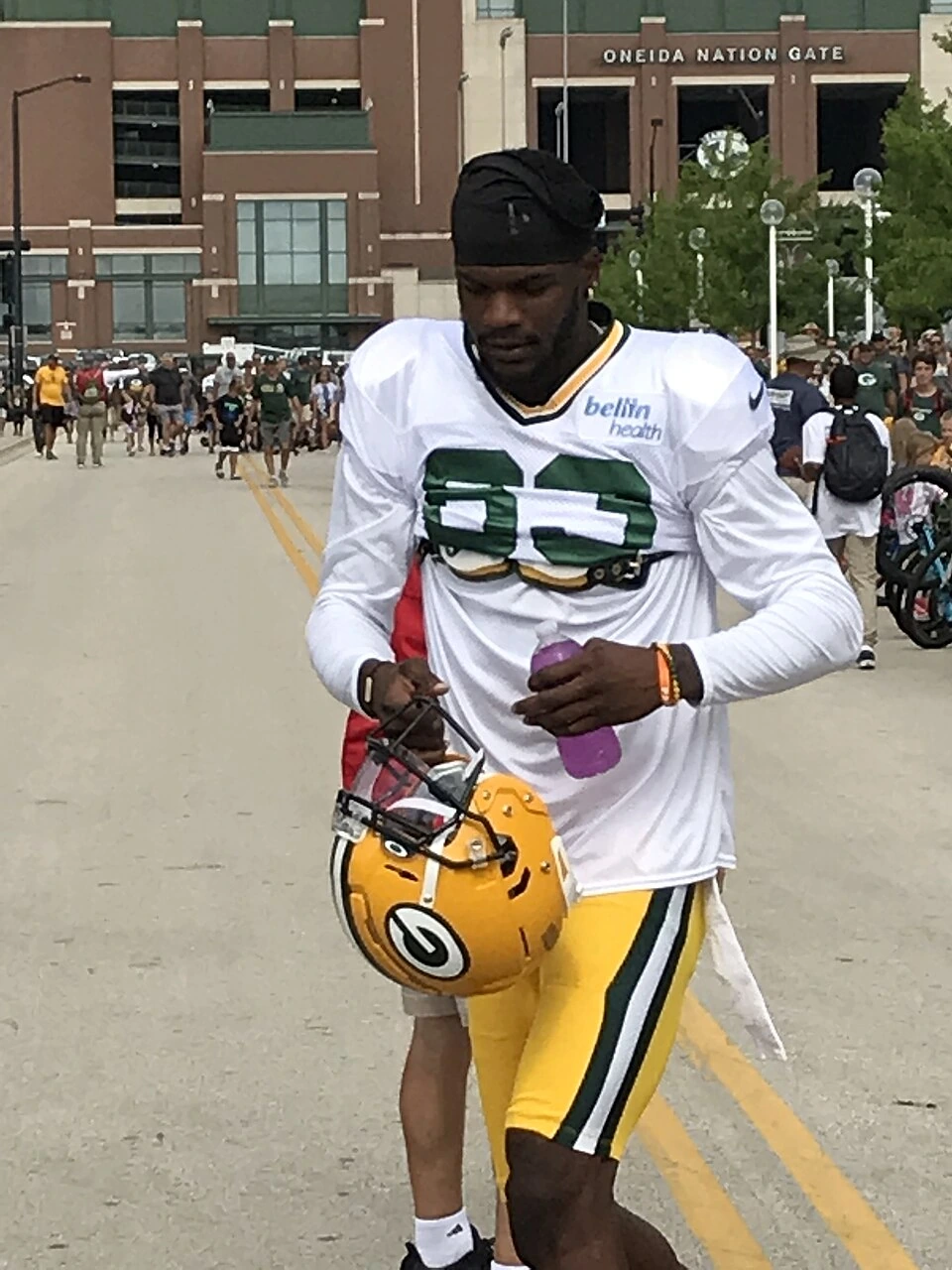
Who Marquez Valdes-Scantling is (and why searches look different)

Marquez Valdes-Scantling is an NFL wide receiver, commonly abbreviated as MVS, who has played for the Green Bay Packers, Kansas City Chiefs, Buffalo Bills, New Orleans Saints, Seattle Seahawks, and most recently the Dallas Cowboys. He signed a one-year deal with the Cowboys in April 2026 according to NFL.com's free agency tracker and reporting from NBC Sports Pro Football Talk. He's best known for his deep-threat speed and for winning a Super Bowl ring with Kansas City.
One quick note on spelling: searches for "marquez valdes scantling net worth" (without the hyphen) and "marquez valdes-scantling net worth" refer to the exact same person. The hyphenated version is the official NFL spelling used on his player page and contract databases like OverTheCap and Spotrac. Don't let the variation throw you off when you're cross-referencing sources.
What net worth actually means for an NFL player
Net worth is simply assets minus liabilities. Assets include cash in savings and checking accounts, investment portfolios, real estate equity, business stakes, and anything else with market value. Liabilities include mortgages, car loans, student debt, and any other money owed. The resulting number is what you'd be left with if you sold everything and paid everything off on the same day.
For NFL players specifically, this calculation is trickier than the contract headline suggests. A $30 million contract sounds like $30 million in the bank, but it isn't. Federal income tax alone can take 37% off the top at that income level, and state taxes in places like Kansas City or Dallas add more. Then there's the NFLPA agent fee (typically 3%), financial advisors, and the reality that contract money is spread across years, not handed over in a lump sum. The cash a player actually pockets from a given season is meaningfully lower than the cap number or the total deal value that gets reported in the headlines.
MVS's reported NFL earnings: contracts, bonuses, and where the money came from

OverTheCap tracks Valdes-Scantling's career earnings at $28,325,556, which represents the cash actually paid out across his NFL career based on their contract and cash-flow framework. Here's how his major deals break down:
| Team | Contract Type | Total Value / Key Terms |
|---|---|---|
| Green Bay Packers | Rookie deal (5th round, 2018) | Minimum-scale rookie wages over 4 years |
| Kansas City Chiefs | 3-year free agent deal | $30,000,000 total, $10,000,000 guaranteed |
| Buffalo Bills | 1-year deal | $2,250,000 (SFA) |
| New Orleans Saints | 1-year deal | $1,125,000 (SFA) |
| Seattle Seahawks | 1-year deal | $4,000,000, $3,000,000 guaranteed, $1.5M signing bonus |
| Dallas Cowboys (2026) | 1-year deal | $1,300,000 base + prorated bonus, ~$1,487,500 cash due |
The Chiefs deal was by far his biggest payday and the contract that makes up the majority of his career earnings total. Worth noting: the $30 million figure is the total contract value, not the guaranteed amount. His actual guaranteed money from that deal was $10 million, which is a more meaningful number for thinking about wealth accumulation. The one-year deals he's signed since then at the Bills, Saints, Seahawks, and Cowboys reflect a later career stage where players take shorter, value-prove-it contracts rather than long guaranteed money.
One thing that trips up a lot of readers is the difference between cap accounting and cash flow. When OverTheCap or Spotrac show a signing bonus prorated across contract years for salary cap purposes, that doesn't mean the player receives the money in installments.
Spotrac explains that for salary cap purposes, signing and option bonuses are prorated across contract years, even though the cash is usually paid upfront Signing bonuses are typically paid out immediately or in a lump sum early in the contract year. .
Signing bonuses are typically paid out immediately or in a lump sum early in the contract year. So his Seahawks $1. 5 million signing bonus was likely in his account well before the season ended, even though cap databases distribute it across contract years. This distinction matters when estimating when money actually hit his balance sheet.
Endorsements, brand building, and off-field income
Valdes-Scantling has been deliberately building his off-field profile. Front Office Sports has covered his brand-building efforts, noting that he hasn't waited for a breakout statistical season to pursue business opportunities. He's also spoken publicly about investing off the field, including in an interview context documented by Black Millionaires around the time of his Chiefs Super Bowl win.
That said, MVS isn't a household name in the endorsement market the way a quarterback or top-five receiver would be. His off-field income is likely meaningful relative to later-career contract values (like the one-year minimum-range deals), but it's not the kind of endorsement portfolio that would dramatically shift his overall net worth estimate. Think of it as a cushion and a supplement to his NFL income, not a multiplier of it. Without disclosed deal values, we can reasonably estimate his annual off-field income in the low-to-mid six figures rather than in the millions.
Why net worth estimates vary so widely depending on where you look

If you search around, you'll find estimates for Valdes-Scantling's net worth ranging from under $5 million to over $20 million. If you are specifically looking for Pilar Valdes net worth, compare the same kind of income and assets assumptions and avoid using any single headline estimate. Here's why that spread exists and which inputs actually matter:
- Gross vs. net earnings: Some sites just report total contract value or career earnings without subtracting taxes, fees, or expenses. Gross and net are completely different numbers.
- Tax assumptions: Federal plus state taxes on NFL income typically run 40-50% of earnings for high earners. Sites that skip this step dramatically overstate take-home wealth.
- Spending and lifestyle: No public data exists on how Valdes-Scantling spends his money. Conservative estimators assume moderate spending; generous ones assume frugality and maxed-out investing.
- Investment returns: If MVS invested early and well, his portfolio could have compounded meaningfully since his rookie deal. If he spent more freely, those same dollars are gone.
- Debt: Any real estate purchases, business investments, or other leveraged assets could add liabilities that reduce net worth significantly.
- No balance sheet disclosure: Unlike publicly traded companies, private individuals don't file public financial statements. Every estimate is exactly that: an estimate.
The methodology this site uses focuses on building a defensible floor and ceiling from documented public data: start with OverTheCap's career earnings figure, apply realistic after-tax and fee deductions, add a conservative estimate for off-field income, and then model low-spend and moderate-spend scenarios to arrive at a range. That's how we get to the $8M to $14M window rather than just repeating a headline contract number.
The current estimate and what could move it up or down
The $8 million to $14 million range is the most defensible window for Marquez Valdes-Scantling's net worth as of May 2026. Here's what anchors that range and what would shift it in either direction:
| Factor | Lower end impact | Upper end impact |
|---|---|---|
| After-tax career earnings | ~$14-15M (assuming 45-48% effective rate) | ~$16-17M (assuming lower state taxes in some years) |
| Agent/advisor fees | Reduces by ~$800K-$1M over career | Same |
| Off-field income (endorsements, investments) | Minimal, low six figures/year | Possible mid-six to low-seven figures if investments compounded well |
| Lifestyle spending over 8+ NFL seasons | High spending reduces to lower bound | Disciplined spending preserves more capital |
| 2026 Cowboys deal | Adds ~$1.49M cash, modest impact | Same base cash, but performance incentives could add more |
| Future contracts / career extension | No additional deals limits upside | Another 1-2 year deal adds $1-4M in gross earnings |
The biggest single variable that could meaningfully shift this estimate upward is investment performance on his Chiefs-era earnings. If he moved a significant portion of that $10M+ guaranteed money into diversified investments in 2022-2023 and held them through the 2023-2025 market run, he could be at the higher end of or even above our estimated range. If his spending has been high and investment activity limited, the lower end is more realistic. His 2026 Cowboys contract adds about $1.49 million in cash this year, which is meaningful but not transformational for overall net worth at this stage.
How to verify and track this figure yourself
Net worth estimates for athletes aren't static, and the best approach is to build your own working model from primary sources rather than trusting any single number from any single site (including this one). man el loco valdés net worth manuel el loco valdés net worth. Here's the practical process:
- Start with OverTheCap (overthecap.com): Search Marquez Valdes-Scantling's player profile. You'll see his current contract, year-by-year salary breakdown, signing bonus proration, and the career earnings total. This is your most reliable source for gross NFL cash.
- Cross-reference with Spotrac (spotrac.com): Spotrac tracks similar contract data and sometimes catches updates faster when signings are announced. Use it to confirm deal terms for the Cowboys 2026 contract.
- Check NFL.com's free agency tracker: For the most recent offseason signings and to confirm his current team and contract status, the NFL's official free agency tracker is authoritative.
- Apply a realistic tax model: For a rough net-of-tax estimate, subtract 42-48% from annual cash earnings to account for federal income tax (top bracket) plus state taxes. This is imprecise but directionally correct.
- Monitor sports business reporting: Follow outlets like Front Office Sports and Sportico for any reported endorsement deals or business partnerships. These are the most likely sources of disclosed off-field income.
- Watch for contract restructures or extensions: Any multi-year deal or significant restructure during or after the 2026 season would materially change the earnings trajectory and warrant a recalculation.
- Set a Google Alert: A simple Google Alert for "Marquez Valdes-Scantling contract" will surface news within hours of any new deal being reported, keeping your model current.
The honest reality is that no one outside Valdes-Scantling's inner circle knows his exact net worth. If you're specifically searching for Matias Varela net worth, you can use the same logic to separate public earnings from actual assets after taxes and expenses. His accountant, financial advisor, and maybe his attorney know the real number.
What we can do is use publicly available contract data, reasonable tax and fee assumptions, and context about career stage to build an estimate that's transparent about its own limitations. That's a more useful and honest approach than confidently stating a number pulled from nowhere.
If you're researching this topic alongside related figures in the sports and entertainment space, the same methodology applies: start with documented earnings, work backward to realistic take-home, and build a range rather than a single figure.
FAQ
Why does his contract value not match what his net worth would realistically be?
Look at “guaranteed” versus “total deal value” first. A contract headline can include incentives and amounts not fully assured. Then model take-home timing, since signing bonuses often hit early (even if they’re prorated for cap purposes).
Does the estimate represent what he earned, or what he is worth today?
Use a 2-step timeline: cash flow by year (what was actually paid) and net worth by date (assets minus liabilities as of today). Even if he earned a lot earlier, taxes, investing returns, and spending since then can move net worth up or down.
What assumptions would change the net worth estimate the most if I build my own model?
If you want to personalize the range, adjust three inputs: your assumed tax rate mix (federal plus likely state), an annual savings or investment rate, and any debt or major purchases. Small changes to those can swing a multi-year estimate by millions.
Why do other sites show numbers as low as under $5 million and as high as over $20 million?
The biggest reason estimates vary is how each source treats off-field income and expenses. Some websites effectively ignore business and lifestyle costs, others assume higher endorsement income, and the methods for investing performance can differ a lot.
How can debt and spending patterns move the estimate toward the low end?
If his guaranteed money from the Chiefs era was invested conservatively and he avoided high-interest debt, the lower end of the range becomes less likely. If he took on leverage (cars, a mortgage far earlier, margin-style investing, or pricey lifestyle spending), net worth could land nearer the bottom even with solid career earnings.
What investment scenario would justify being near or above the $8M to $14M range?
If he invested primarily in broad diversified funds and stayed invested through market upswings, the higher end becomes more plausible. Concentrated bets, big drawdowns, or early withdrawals can cap upside, so “good markets” do not automatically mean “higher net worth.”
How should I handle signing bonuses and prorated amounts when estimating take-home wealth?
Cap prorations reflect accounting rules, but cash payments determine the money he had to invest or spend. For example, a prorated signing bonus can still mean a lump-sum deposit early in the contract year, changing near-term wealth building.
Are taxes calculated the same way for salary, bonuses, and off-field income?
Net worth can be materially affected by taxes on different income types. For instance, bonus structures, endorsement income, and certain investment gains may be taxed differently than standard salary, so mixing them together with one flat rate can mislead.
How can I create a conservative versus optimistic range using the article’s logic?
If you want a more conservative “floor,” assume minimal off-field income beyond a low-to-mid six-figure range and assume moderate spending. If you want an “upside” scenario, increase off-field income modestly and assume a consistent investment return on the portion saved from the biggest guaranteed deals.
How often should the net worth estimate be updated for it to stay accurate?
The estimate should shift each year mainly from net investment returns, spending changes, and any new cash payments from contracts. A player’s net worth estimate usually changes slower than reported earnings because it reflects cumulative outcomes, not only the latest season.
Next Article
Fernando Valenzuela Net Worth at Death: How to Verify
Cómo verificar el patrimonio neto de Fernando Valenzuela al fallecer: fuentes, método y cómo conciliar cifras.