As of early 2026, MarketScreener places Valentín Díez Morodo's net worth at approximately $147 million USD, calculated as of March 30, 2026. That figure is built almost entirely from his known holdings in publicly listed companies, primarily KUO, DINE, and Grupo Aeromexico, using share valuations tied to a specific date. It is not an audited number, and it almost certainly understates his real wealth because it leaves out private assets, real estate, and any stakes in unlisted businesses. If you are comparing net worth methods across different business profiles, you can also review how aggregators handle cases like hector deville net worth. Because these estimates are based on publicly disclosed holdings, the reported Normando Valentín net worth can differ from what private assets and unlisted stakes add up to.
Valentín Díez Morodo Net Worth: estimación y cómo verificar

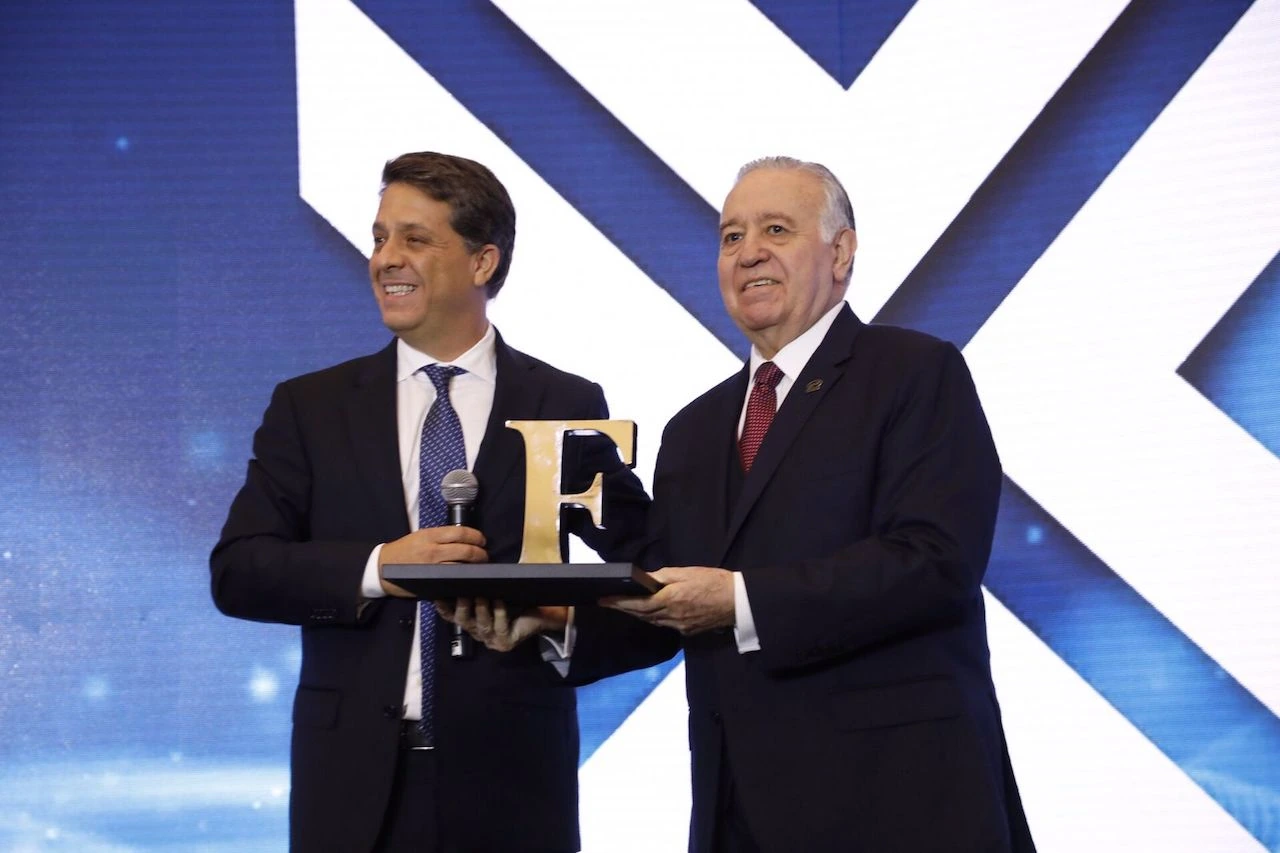
Who Valentín Díez Morodo is and why people look up his wealth

Valentín Díez Morodo is a Mexican businessman and corporate director whose name appears on the boards of some of the most recognizable companies operating in Mexico and beyond. He has served as president of COMCE (Consejo Empresarial Mexicano de Comercio Exterior) since 2004, and he is president of the patronato of the Fundación Casa de México en España. His board memberships have included Banamex, Citigroup Advisory Board, Grupo México, Telefónica México, Zara México, Kimberly-Clark de México, and Grupo Aeromexico, among others.
Part of his public profile also connects to the Díez Riega family lineage, rooted in the business legacy of Nemesio Díez Riega, which gives him both inherited context and an independently built career spanning decades. He played a notable role in the sale of Grupo Modelo to AB InBev, and a 2014 SEC-documented real estate transaction shows he personally purchased property in Toluca for $28 million USD, priced at the average of two independent appraisals. That kind of data point is exactly why wealth researchers and journalists start paying attention: the transactions leave a paper trail.
People search for his net worth because he sits at the intersection of high-profile Mexican business, international corporate governance, and family wealth. He is not a celebrity in the entertainment sense, but within the Spanish-speaking business world he is a recognizable figure whose influence touches aerospace, finance, beer, retail, and trade policy.
Current net worth estimate and how sites get to that number
The most specific public figure available right now comes from MarketScreener, which lists $147 million USD as of March 30, 2026. His héctor travieso net worth is often discussed in connection with other publicly tracked insider positions and wealth aggregators. The platform breaks this down into a table of known holdings in publicly traded companies, each with a valuation date and a dollar figure attached. The three most significant disclosed positions include stakes in KUO (valued at approximately $64 million and $34 million across different share classes) and Grupo Aeromexico (approximately $9 million). Those numbers shift whenever share prices move, which is why the valuation date matters.
The methodology behind these estimates follows a straightforward logic: take the number of shares an insider holds, multiply by the current or reference-date market price, and sum across all disclosed positions. MarketScreener derives its data from insider ownership filings and positions disclosed through regulatory sources. On the SEC side, Díez Morodo filed a Form 3 on March 18, 2026 for Grupo Aeromexico, declaring direct ownership of 6,518,960 shares, economically equivalent to 651,896 American Depositary Shares (ADSs). That is a public, verifiable anchor point for at least part of his documented wealth.
blank" rel="noopener noreferrer">GuruFocus also maintains an insider trading and ownership report page for him using SEC filings as the source, though the displayed figures depend on what has been formally reported. If you are also looking into how other prominent business figures stack up, compare this approach with Valentín Trujillo net worth. Neither platform claims to capture his full net worth, only the portion visible through regulatory disclosures. For more background on his financial standing, see Vladimir Padrino López net worth.
Sources worth checking to verify or challenge the estimate

If you want to go beyond a single aggregator number and actually pressure-test the estimate, here are the source categories that matter most:
- SEC EDGAR: Search 'Diez Morodo Valentin' for Form 3, Form 4, and any prospectus filings. These are legally required disclosures with timestamps, share counts, and transaction prices. The March 2026 Form 3 for Aeromexico is a recent, concrete example.
- MarketScreener insider profile: Provides the aggregated $147M figure with a holdings table and valuation dates. It is a useful starting point but reflects only publicly listed positions.
- GuruFocus: Cross-references SEC insider filings and can show transaction history over time, useful for spotting buys, sells, and changes in position size.
- Bolsa Mexicana de Valores (BMV): Assembly and shareholder documents sometimes name major stockholders and directors. KUO debt supplements from BMV have listed Díez Morodo as a major stockholder as recently as 2017.
- London Stock Exchange RNS filings: An LSE announcement documented a transaction where Díez Morodo and María Asunción Aramburuzabala acquired deferred share entitlements for approximately 23.1 million AB InBev shares, with a consideration of roughly $1.5 billion USD total. This illustrates the scale of transactions he has been party to.
- El Universal, El Financiero, and Expansión: Mexican financial journalism has covered his board roles and specific transactions in detail. El Financiero in particular has profiled him as a key advisor in major M&A deals.
- COMCE official biography: Confirms his current and historical roles without providing financial figures, but is essential for verifying the career timeline that underlies wealth claims.
How his wealth has likely shifted over time
Díez Morodo's wealth has not been a straight line up, and understanding the timeline helps contextualize the current estimate. His early career was shaped by the Díez Riega family business legacy and his rise through Mexico's corporate establishment during the 1990s and 2000s. Appointments to the boards of Banamex, Citigroup, Grupo México, and Telefónica México placed him in the orbit of some of the largest capital concentrations in Latin America.
The Grupo Modelo sale to AB InBev was a pivotal event. As a partner and director of Grupo Modelo, he would have had an ownership stake or board compensation tied to that transaction. The LSE-documented AB InBev entitlement deal, which involved deferred shares worth over a billion dollars in aggregate for two principals including Díez Morodo, suggests that at least part of his wealth crystallized through this process.
The 2014 real estate transaction in Toluca for $28 million USD, disclosed in an SEC filing, shows a significant property acquisition happening post-Modelo deal. By 2017, KUO debt filings still listed him as a major stockholder. The March 2026 SEC Form 3 for Aeromexico confirms he remains an active, disclosed insider with substantial share holdings as of the current date. The $147 million figure from MarketScreener likely reflects a somewhat reduced position compared to peak years when Modelo-related wealth was at its highest, given that some of those deferred entitlements would have been received and potentially diversified or deployed elsewhere.
Why the estimate is probably wrong in some direction
Every net worth estimate for a private businessperson like Díez Morodo carries real uncertainty, and $147 million is almost certainly not the precise answer. Here is where the gaps tend to appear:
- Private assets are invisible: Real estate holdings beyond the 2014 Toluca transaction, stakes in private companies, and any assets held through family trusts or holding vehicles do not appear in public filings unless specifically required.
- Board compensation is rarely fully disclosed: Long-tenured directors at major Mexican and multinational corporations earn fees, stock grants, and bonuses that accumulate over decades. These are difficult to track comprehensively from public sources.
- Currency and timing effects distort comparisons: Holdings denominated in Mexican pesos, when converted to USD, fluctuate with the exchange rate. A figure calculated on March 30, 2026 could look meaningfully different by the time you read it.
- Debt is not accounted for: Aggregators like MarketScreener show gross asset value from public holdings, not net of liabilities. A $147M gross position could be partly leveraged.
- The AB InBev entitlement figure is ambiguous: The LSE document referenced a combined total for two people, making it impossible to isolate Díez Morodo's individual share from that transaction without additional disclosure.
- Philanthropic structures may hold assets: His role as head of the Fundación Casa de México en España involves institutional structures that may hold assets in his name or under his direction without those appearing as personal wealth.
A quick checklist to sanity-check any figure you find

- Check the valuation date on any holdings table. A figure from 2023 is not useful in 2026.
- Verify the source pulls from actual SEC filings or BMV disclosures, not from other estimate sites that may simply copy each other.
- Look for whether the estimate includes only public holdings or claims to cover total wealth. If it claims total wealth, ask how they derived the private asset component.
- Cross-reference at least two independent platforms (MarketScreener, GuruFocus, SEC EDGAR directly) to see if the share counts match.
- Treat the figure as a floor, not a ceiling. For someone of his corporate history, the real number is likely higher once private assets are included.
Where to find updates and how to cite this responsibly
For the most current data, the three best live sources are MarketScreener (which updates its holdings table when new filings appear), SEC EDGAR (which will show any new Form 4 insider transactions or prospectus disclosures in real time), and GuruFocus for a transaction history view. If Aeromexico or KUO files new disclosures that include Díez Morodo as an insider, those will surface on SEC EDGAR first.
When citing a net worth figure for Valentín Díez Morodo in any research, journalism, or reference context, be specific about three things: the source, the valuation date, and what the figure actually covers. Writing 'net worth of $147 million USD according to MarketScreener as of March 30, 2026, based on publicly disclosed holdings in KUO, DINE, and Grupo Aeromexico' is honest and defensible. Writing '$147 million net worth' without context implies a precision and completeness that the underlying data simply does not support.
It is also worth noting that unlike entertainment figures (where public contracts and box office receipts make wealth estimation somewhat more tractable), business executives like Díez Morodo build fortunes through equity stakes, board compensation, and private transactions that are structurally harder to track. If you are researching similar profiles in the Spanish-speaking business and public figure space, the same limitations apply broadly: the figures you find are almost always partial pictures, and the most honest sites are transparent about that.
FAQ
Why do different sites show very different “Valentín Díez Morodo net worth” numbers?
Most discrepancies come from what each site includes, such as only publicly disclosed equity positions versus adding private companies, real estate, trusts, and debt or credit lines. Another frequent driver is the valuation date, since share prices and insider disclosures change over time.
What does the $147 million estimate actually cover, and what does it likely miss?
It is mainly a sum of his stakes in publicly listed companies using share counts tied to a specific reference date. It typically misses privately held assets, non-public partnerships, and real estate not reflected in regulatory disclosures, so the true figure could be higher.
How can I verify the “public holdings” portion using SEC filings?
Look for SEC insider ownership forms tied to the relevant issuer, especially Form 3 (initial statements) and Form 4 (changes from purchases or sales). Confirm the share count, the CUSIP, and the filing date, then check whether any ADR or ADS equivalency is stated.
If Form 3 shows ADS equivalence, should I assume the website’s net worth math is correct?
Not automatically. ADS conversion ratios and economics can be misstated or interpreted differently depending on the listing. For accuracy, use the issuer’s reported share type and convert consistently, then re-calculate using the same valuation date used by the net worth estimator.
How do share classes in KUO (or other firms) affect the estimate?
Different share classes can carry different vote rights and sometimes different market prices, so the total only becomes comparable if each class is priced correctly. Check whether the aggregator separates share classes and whether it uses the correct ticker or reference price per class.
Why might his net worth appear lower than earlier peak years?
The estimate can decline if holdings were reduced, if deferred entitlements were later converted, and if the sites stop counting certain components after payout or restructuring. It can also fall purely from market moves if the valuation date occurs after share prices declined.
Is MarketScreener’s number meant to be an audited net worth?
No. Treat it as an approximation based on disclosed insider ownership and market valuations at a chosen date. For research quality, always label it as “estimated” and specify the valuation date and the publicly listed holdings included.
What’s the quickest way to pressure-test a net worth figure for him?
Rebuild it from the ground up using share counts from SEC insider filings, multiply by the reference-date market prices you can observe for each issuer, then compare your recalculation to the aggregator’s total. Any large gap usually indicates missing positions, wrong share class/ticker, or an out-of-date valuation date.
How often should I refresh a “Valentín Díez Morodo net worth” page?
At minimum, check around new insider filings, typically when Forms 4 or new company disclosures appear. If the page matters for current reporting, refresh weekly during active periods, and always verify the valuation date on the site before quoting.
Can negative events like lawsuits or leverage reduce the real net worth beyond what estimators show?
Yes. Equity-only aggregation ignores liabilities and can overstate net worth if leverage is significant, and it can understate it if assets are concentrated in private entities not captured by filings. If you need a more conservative view, look for disclosures that hint at contingent liabilities, financing arrangements, or changes in asset encumbrances.
What information should I include when quoting his net worth in journalism or research?
Include the source name, the valuation date, and the scope, for example “based on publicly disclosed holdings in specific issuers.” Also state that it is not a comprehensive asset-and-liabilities calculation, to avoid implying precision the underlying data cannot support.
If he holds stock through a corporate or family structure, will SEC forms show it?
Sometimes yes, sometimes no, depending on how ownership is reported and which entity is listed as the beneficial owner. If you see missing positions, check whether he is disclosed as a beneficial owner via trusts or holding companies, and reconcile that with the issuer’s definition of beneficial ownership.
Fernando Valenzuela Net Worth at Death: How to Verify
Cómo verificar el patrimonio neto de Fernando Valenzuela al fallecer: fuentes, método y cómo conciliar cifras.