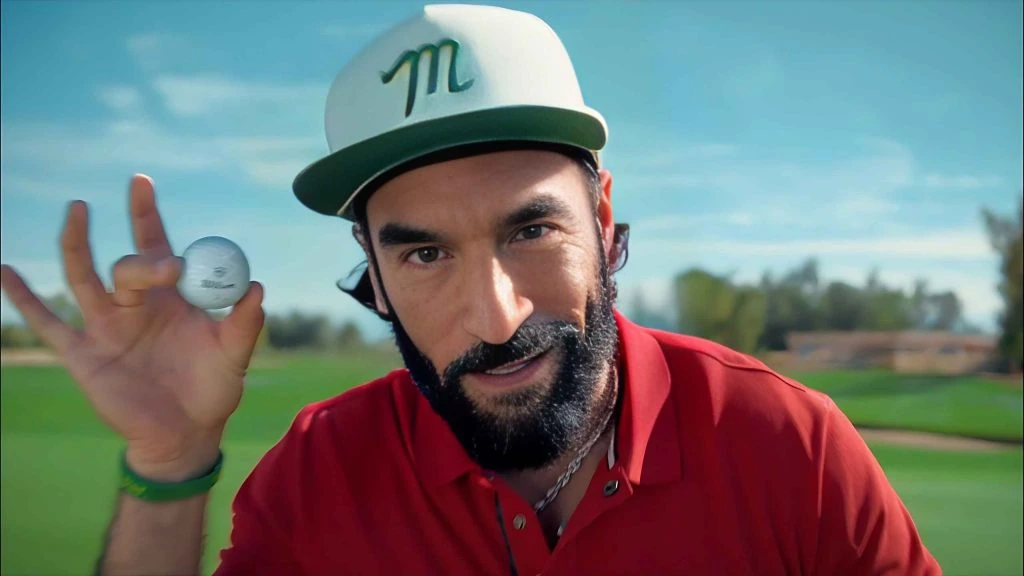
The Freddy Vega most people are searching for is John Freddy Vega, the Colombian tech entrepreneur who co-founded Platzi, one of Latin America's largest online education platforms. His estimated net worth as of mid-2026 sits in the range of $5 million to $20 million USD, with the wide band reflecting the difficulty of valuing an equity stake in a private, venture-backed company. That range is a working estimate built from publicly available information about Platzi's growth trajectory, funding rounds, and Vega's role as CEO, not a confirmed figure he has ever disclosed.
Freddy Vega Net Worth: How to Verify Sources and Estimate It

Ricardo Sandoval
6 Jul 2026

Which Freddy Vega are you actually looking for?

The name Freddy Vega is genuinely ambiguous, and that ambiguity is exactly why searches for his net worth return inconsistent or mixed results. Before you trust any number you find, you need to confirm you are looking at the right person. Here are the main candidates you are likely to encounter:
- Freddy Vega (tech/education): Co-founder and CEO of Platzi, a Colombian-born entrepreneur whose full legal name appears in some business databases as John Freddy Vega. He runs the company from the United States and Colombia, has given interviews to Forbes Colombia, El País, Bloomberg Línea, and El Tiempo, and maintains an active personal site at freddyvega.com. This is almost certainly the person behind your search.
- Freddy Vega (football/sports administration): A separate individual linked to Colombian football administration and club management, mentioned in outlets like El Gráfico in the context of FAS and league advising. Completely different career, different country context, no credible net worth data available.
- Freddy Vega (music/family context): A name that appears in Mexican media (La Jornada) in a musical family context, likely referring to yet another unrelated individual.
- Generic homonyms: Tools like Adapt.io or The Org sometimes list 'John Vega' or 'John Freddy Vega' interchangeably, which can create confusion if you are cross-referencing business databases.
The fastest way to confirm you have the right person: check whether the source explicitly mentions Platzi, Colombia, and an online education background. Forbes tiene una ficha de Platzi en la que aparecen personas vinculadas a la empresa, lo que ayuda a corroborar identidades asociadas a variaciones como “John Freddy Vega” fuente explícitamente menciona Platzi. If it does, you are looking at the tech entrepreneur. If the source mentions football clubs, music, or an entirely different industry without any connection to Platzi, you have the wrong Freddy Vega.
How celebrity and entrepreneur net worth estimates actually get built
Net worth estimates for private individuals like Freddy Vega are never pulled from a tax return or bank statement. They are constructed from public signals and reasonable assumptions. Understanding how this works helps you judge whether any number you see is credible or just made up.
For a tech founder, the primary driver of estimated net worth is equity value. If Platzi raised venture capital at a valuation of, say, $100 million, and Vega owns even a modest 10 to 20 percent stake after dilution, that alone puts his paper wealth in the $10 to $20 million range. But that equity is illiquid: it is not cash until the company is sold or goes public. Salary as CEO adds a more predictable income stream, typically in the range of $150,000 to $500,000 annually for a company of Platzi's scale, but that figure is not public either.
What we can observe publicly: Platzi has served over 5 million students across Latin America (some reports cite up to 7 million as of recent years), the company has received investment from prominent venture funds, and Vega has been consistently featured as a top tech innovator in outlets like Portafolio and Forbes Colombia. Those are signals of a company generating real revenue, which means Vega's equity is not worthless. But none of it gives us a precise number.
Freddy Vega's career and income sources

Freddy Vega started from very modest beginnings, a story he has told publicly in interviews with El Tiempo and Bloomberg Línea: learning to code on a borrowed calculator and a basic PC, eventually building a programming audience online, and co-founding Platzi (originally called Mejorando.la) alongside Christian Van Der Henst. The company pivoted into a subscription-based online tech school and scaled aggressively across Latin America.
His income sources, based on publicly available information, likely fall into these categories:
- CEO salary from Platzi: the most stable and predictable component of his income, though the exact figure is not public.
- Equity stake in Platzi: the largest potential driver of his net worth. Platzi has raised multiple rounds of venture funding; each round dilutes founders but also validates and increases the company's total valuation.
- Speaking fees and conference appearances: Vega is a regular speaker at tech and education events across Latin America and has participated in events like the Summit of the Americas, which suggests meaningful fees on top of his operating income.
- Content and media: He maintains an active personal blog and public presence, and some of that activity likely generates ancillary income through sponsorships or brand partnerships, though none have been publicly quantified.
- Advisory or board roles: Possible but not confirmed in any primary source.
Importantly, Vega's wealth is almost entirely tied to Platzi's success. Unlike entertainers or athletes who accumulate real estate portfolios or diversified investments early in their careers, tech founders tend to be heavily concentrated in their company equity until a liquidity event. That makes his net worth unusually sensitive to Platzi's valuation at any given moment.
The net worth estimate and how it shifts over time
Working from the available signals, a reasonable estimate for Freddy Vega's net worth as of July 2026 is $5 million to $20 million USD. Here is how that range breaks down:
| Scenario | Key Assumption | Estimated Net Worth |
|---|---|---|
| Conservative | Platzi valued at $50M, Vega retains 10% post-dilution, modest salary savings | $5M – $8M |
| Mid-range | Platzi valued at $100M–$150M, Vega retains 10–15% equity, active income added | $10M – $15M |
| Optimistic | Platzi valued at $200M+, Vega retains higher equity, speaking/content income included | $15M – $20M+ |
This estimate changes meaningfully depending on two things: whether Platzi has raised additional funding at a higher or lower valuation since its last public round, and whether any partial liquidity event (secondary sale of shares, for example) has allowed Vega to convert equity into actual cash. Without a confirmed funding announcement or acquisition, the equity component remains paper wealth and the upper end of that range stays speculative.
Over time, his net worth has almost certainly grown alongside Platzi's user base expansion from a few hundred thousand students to several million. The period from roughly 2018 to 2023 was a high-growth phase for online education globally, which likely boosted Platzi's valuation and, by extension, Vega's estimated wealth. Post-2023, the broader contraction in edtech valuations could have pulled those numbers back somewhat.
Public signals that support or challenge these numbers

When you are trying to verify a net worth estimate, you look for public signals that are consistent with the claimed wealth level. For Freddy Vega, the signals are reasonably supportive of a mid-seven-figure estimate but do not confirm the upper end of the range.
- Media coverage quality and frequency: Regular profiles in Forbes Colombia, El País, Bloomberg Línea, and El Tiempo are consistent with someone running a serious, scaled business. These are not gossip outlets; they profile operators with real revenue.
- Industry recognition: Named among MIT Technology Review's Innovators Under 35 for Latin America (as noted by Portafolio), which is a legitimacy signal for both his professional standing and the company's traction.
- Company scale: Platzi serving 5 to 7 million students across Latin America at subscription pricing (plans range roughly from $20 to $30 per month) implies tens of millions in annual recurring revenue, which supports a company valuation in the range used above.
- Conference and summit appearances: Speaking at events like the Summit of the Americas (documented by Forbes Colombia) signals that his public profile is operating at a regional leadership level, not just startup-circuit level.
- Personal site activity: Regular publishing at freddyvega.com, with posts dated as recently as 2022 and content indexed as current in mid-2026, confirms he is an active public figure and not a dormant or retired one.
- No visible luxury asset signals: Unlike entertainment celebrities, there is no public record of high-profile real estate purchases, yacht ownership, or other lifestyle signals that would push the estimate toward the upper range.
The Reddit discussions about Platzi's reputation and whether Vega is a 'vendehumos' (smoke-seller) are worth noting as qualitative context. En el hilo de Reddit r/programacion, usuarios discuten si Platzi y Freddy Vega encajan o no en la etiqueta de “vendehumos” 'vendehumos' (smoke-seller). Community skepticism exists, but that does not directly affect a net worth estimate, which is about verifiable financial scale, not public opinion.
Why different websites show different numbers
If you search 'Freddy Vega net worth' across multiple sites, you will likely see figures ranging from $1 million to $50 million or higher, and some sites will confidently present a single precise number like '$12 million' without any explanation of how they got there. Here is why that happens and how to filter for the most trustworthy estimate.
Most low-quality net worth sites use one of three methods: copying an older estimate from another site and updating the year, applying a generic multiplier to publicly known revenue figures without accounting for costs or equity dilution, or simply making up a number that sounds plausible. None of these methods are disclosed to the reader, which is why you see such wide variation.
A more trustworthy estimate will do at least three things: clearly identify which Freddy Vega is being discussed (disambiguation), explain the income sources and how they were valued, and acknowledge what is unknown. Any site that presents a single precise number for a private tech founder without explaining the equity valuation method should be treated with skepticism. The honest answer for someone like Vega is always a range, not a point estimate.
For comparison, other public figures with the Vega surname operating in entertainment and media (such as Paz Vega in film or Louie Vega in music) have net worth profiles that rely on more visible income streams like film contracts, music royalties, and public performance fees, making those estimates somewhat easier to build. Freddy Vega's wealth is more opaque precisely because it lives inside a private company.
How to research this properly right now
If you want to build the most current picture of Freddy Vega's net worth today, here is a practical sequence to follow: If you are specifically looking for Matthew Vega Sanz net worth, start by verifying the identity and the equity valuation assumptions behind any number you see Freddy Vega's net worth.
- Confirm identity first: Search 'Freddy Vega Platzi' and verify that your results match the tech entrepreneur with profiles on Forbes Colombia, Bloomberg Línea, and El País. If a result does not mention Platzi, set it aside.
- Check for recent funding news: Search 'Platzi funding 2025' or 'Platzi valuation 2026' in Google News. Any announced funding round will give you an updated company valuation, which is the single most important input for estimating Vega's equity wealth.
- Look at Platzi's public metrics: The company occasionally shares student numbers and growth data in press releases and interviews. More users at consistent pricing means more revenue, which supports higher valuations.
- Search Freddy Vega's personal site (freddyvega.com) and LinkedIn: These are primary sources that confirm his current role, any new ventures, and his public activity level. A founder who has stepped back from operations is a different wealth profile than one actively running the company.
- Check Crunchbase and PitchBook summaries: Both platforms aggregate publicly announced startup funding data. Even free-tier access gives you a list of Platzi's funding rounds and approximate amounts, which directly feeds your equity valuation estimate.
- Cross-reference any net worth claim against at least two independent sources: If a site claims $30 million and no other credible source comes close to that number, discount it. Convergence across independent estimates is a better signal than confidence from a single source.
- Note the date of any estimate you use: Net worth figures for private company founders can shift by millions within a single funding cycle. An estimate from 2021 is not reliable for 2026 without an update check.
One practical note: if you are researching this for professional purposes (journalism, business development, investor background checks), none of the publicly available net worth estimates, including this one, substitute for a formal financial disclosure. Freddy Vega has never publicly disclosed his personal net worth, and Platzi is a private company with no obligation to publish audited financials. You may also see the same discussion summarized as Manolo Vega net worth claims, but those should be cross-checked against the Freddy Vega who is tied to Platzi. Everything available is an informed estimate, and you should present it that way.
FAQ
How can I tell if a “Freddy Vega net worth” figure is actually about John Freddy Vega of Platzi?
Look for at least two matching identifiers in the same source, for example “Platzi” plus “CEO/co-founder” or “Colombia” plus “online education.” If it only says “Freddy Vega” and gives a number with no industry context, assume it is misidentified or recycled.
Why do estimates range from under $5 million to over $50 million, even when sources cite the same growth story?
Most sites estimate equity value using assumptions about ownership percentage, dilution from later funding, and current company valuation. If one site assumes a higher post-dilution stake or a later higher valuation, the range can swing dramatically, even without any new real-world liquidity.
Are any net worth numbers for Freddy Vega “cash” or are they mostly “paper wealth”?
For a private tech founder, most estimates are paper wealth because they are tied to equity value in Platzi rather than disclosed bankable assets. Unless there is a reported secondary sale or acquisition, treat the number as an indicator of potential value, not spendable cash.
What would qualify as a “liquidity event” for Freddy Vega, and how would it change net worth?
A secondary share sale (sold by shareholders rather than the company), an acquisition where the founder receives cash or liquid shares, or an IPO are the main catalysts. In those scenarios, credible estimates often narrow because reported transaction terms let analysts convert equity into more concrete value.
How do I spot a fabricated or low-quality net worth estimate faster than reading the whole article?
Scan for whether the site explains the method behind the number, including ownership assumptions and dilution. If it provides a single precise dollar figure with no valuation logic, no year reference, and no discussion of uncertainty, it is likely copy-and-update or guesswork.
If Platzi’s valuation dropped after 2023, should Freddy Vega’s net worth estimates also drop immediately?
Not always immediately, because pricing depends on whether there are updated funding rounds or secondary transactions. But if you see a series of lower valuations with no liquidity, the equity-only estimates should be revised downward over time, and the upper end of ranges should become less believable.
Should I trust net worth estimates that mention “revenue multipliers” for a private company?
Be cautious. Revenue multipliers ignore profitability, cost structure, and capital intensity, and they also miss how venture-backed valuations are influenced by growth and future expectations. Better estimates use a valuation and then estimate equity ownership after dilution.
Is there any practical way to verify Freddy Vega’s stake without access to internal ownership records?
You usually cannot verify the exact percentage unless there are public signals like reported option exercises in filings, disclosed cap tables in credible coverage, or transaction disclosures from a secondary. In most cases, analysts bracket the stake using typical founder and dilution ranges, which is why serious reports present a range.
What’s the safest way to cite Freddy Vega net worth in a business or journalism context?
Use a range and attribute it as an estimate derived from public signals, then state what you could not verify (for example, exact ownership, dilution, and any personal liquidity). Also include the date of the estimate because private-company equity can reprice between quarters without headlines.
Could “Manolo Vega net worth” or other Vega-name variants refer to the same person?
Often they are different people, or the name is being conflated by low-quality sites. Cross-check whether the mention ties to Platzi and the Colombian tech-education background; if it does not, treat it as unrelated.
Next Article
Manolo Vega net worth: estimate, sources, and how it’s calculated
Estimación del patrimonio de Manolo Vega: fuentes públicas, método de cálculo, límites y mejor rango actual con contexto