
Diego Velázquez's net worth, expressed in modern terms, is estimated at roughly $1 million to $3 million USD equivalent when historians adjust his documented 17th-century earnings and assets for purchasing power. That range is wide on purpose: no single authoritative figure exists, and any single number you see on a net-worth aggregator site should be treated as a rough approximation rather than a calculated total. Velázquez died in 1660, centuries before standardized personal finance records, and his wealth has to be reconstructed piece by piece from royal payroll documents, property sales, and a post-mortem inventory.
Diego Velázquez Net Worth: Estimate and How It’s Figured Out

Ricardo Sandoval
17 Jun 2026
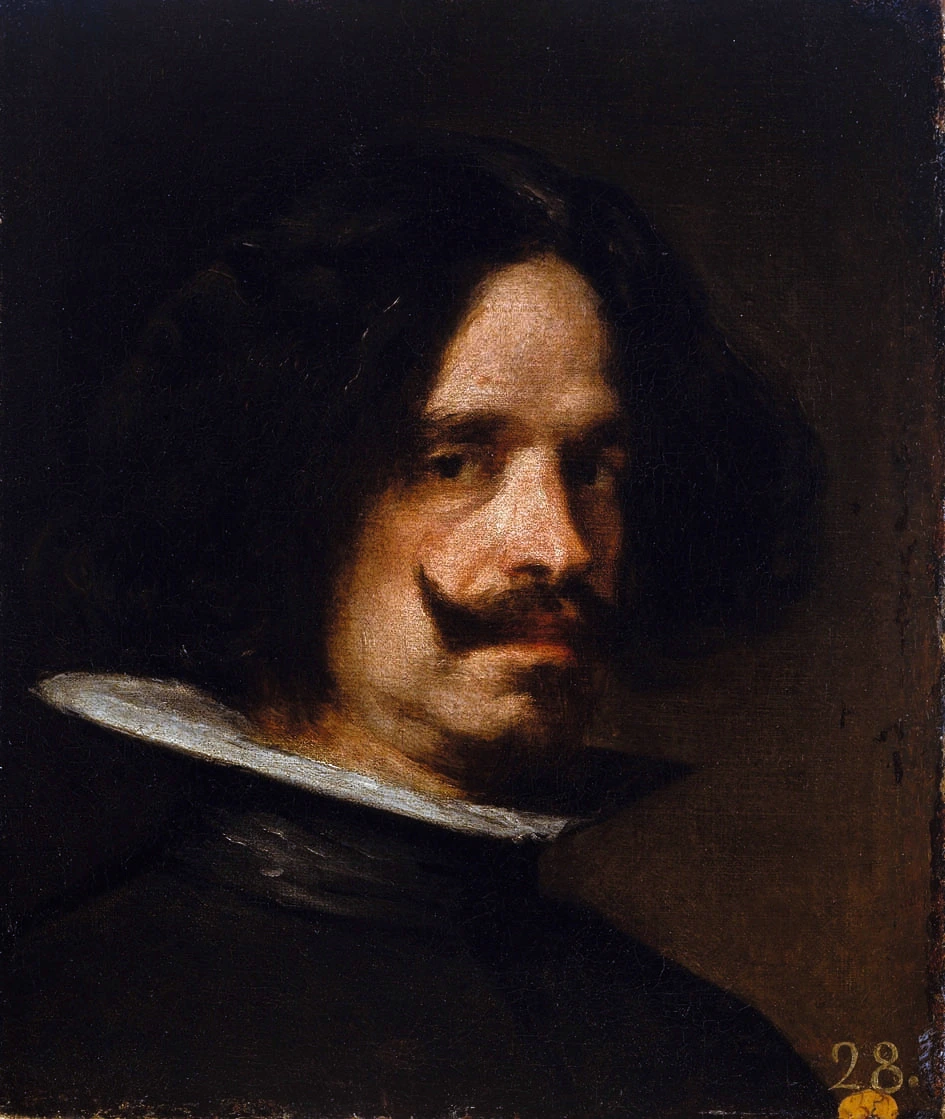
Why "net worth" is complicated for a 17th-century painter
Net worth, in the modern sense, means total assets minus total liabilities at a given point in time. For someone alive today, you pull together bank accounts, real estate values, investment portfolios, and debts. For Velázquez, none of that paperwork exists in a tidy, consolidated form. What survives are fragments: royal appointment documents, archival payroll entries, a handful of property records, and a post-mortem inventory compiled in July 1661, more than a year after he and his wife Juana Pacheco both died in August 1660. Historians work from those fragments and make informed estimates, not calculations.
The core challenge is that 17th-century Spanish royal court finances were messy. Salaries were often paid in arrears, payments came in multiple currencies (reales, ducats, and escudos show up in the same period), and a court painter's total income was not simply his stated salary. Commissions for specific paintings were negotiated and recorded separately from base pay. So when you ask "how much was Velázquez worth," the honest answer requires pulling together at least three distinct streams of income and then estimating assets from whatever property records and inventories survived.
Where his money actually came from
Royal court salary
Velázquez was appointed court painter to Philip IV in October 1623, with an initial salary of 20 ducats per month, paid through the royal paymaster and tied to work at the Alcázar and royal estates including Casa del Campo and El Pardo. That appointment document is publicly transcribed and is one of the most reliable data points available. Over his career, his salary grew substantially.
Archival files from the Archivo General de Palacio (AGP) record a later annual figure of 900 ducats for his role as "pintor de cámara," and a Ministry of Culture summary of the Archivo General de Simancas references a maximum court painter salary of 72,000 maravedís, which works out to roughly 192 ducats per year. The 900-ducat figure from AGP represents his higher-rank compensation later in his career and is the more commonly cited baseline.
Benefits beyond cash salary

On top of salary, Velázquez received significant in-kind benefits. AGP records indicate he was entitled to a daily ration comparable to that given to the royal barbers, and he had access to a dwelling on Calle Concepción Jerónima in Madrid (inherited through his son-in-law Juan Bautista Martínez del Mazo). Housing alone in 17th-century Madrid was a meaningful benefit that would not appear as a cash figure in payroll records. These non-cash elements are easy to undercount when estimating total compensation.
Painting commissions
This is the piece that most net-worth estimates get wrong or simply skip. The Ministry of Culture's archival note is explicit on this point: court painter salaries did not include payment for specific artworks commissioned by the crown or private patrons. Those commissions were negotiated separately and recorded in separate payment registers. Velázquez's body of work, which includes Las Meninas, Las hilanderas, and a substantial run of royal portraits, would have generated significant additional payments. The problem is that the exact amounts for individual commissions are not all documented or publicly accessible, so this stream is often under-represented in modern estimates.
Property and other assets
There is at least one documented property transaction: in August 1627, Velázquez and his wife granted a power of attorney to Francisco Pacheco (his father-in-law and teacher) to sell a house in the Alameda of Seville. The property was ultimately sold at auction for 160 ducats. That's a modest sum, but it confirms that Velázquez held real estate beyond his Madrid residence and was actively managing assets.
The post-mortem inventory taken on 27 July 1661 before notary Juan de Burgos, connected to the couple's residence in the Casa del Tesoro, is the most comprehensive surviving snapshot of what he actually owned at death. The full inventory is transcribed and accessible via the Centro de Estudios Europa Hispánica's Velázquez Digital database.
This matches the CEEH-hosted record of the inventory of the goods left by Velázquez and Juana Pacheco, including the dated transmittal and the later certified extraction on 18 August 1665 by notary Juan de Burgos The full inventory is transcribed and accessible via the Centro de Estudios Europa Hispánica's Velázquez Digital database. .
What the numbers actually look like side by side
| Income/Asset Source | Documented Figure | Reliability |
|---|---|---|
| Initial court salary (1623) | 20 ducats/month | High — transcribed royal appointment document |
| Senior court salary (pintor de cámara) | 900 ducats/year | High — AGP archival file |
| Maximum court painter salary reference | 192 ducats/year (72,000 maravedís) | High — Archivo General de Simancas |
| Seville property sale (1627) | 160 ducats | High — notarial power-of-attorney document |
| Painting commissions | Not consolidated | Low — payments recorded separately, incomplete |
| Post-mortem estate inventory (1661) | Itemized but not totaled publicly | High for existence; moderate for valuation |
How reliable are the net worth figures you find online?
Most of the net-worth figures circulating for Velázquez on aggregator websites are not derived from primary historical sources. For a modern contrast to how net worth claims get presented online, you can compare this with how sites discuss Diego Della Valle net worth. They typically compress a biography into a single dollar figure without explaining the methodology, the purchasing power conversion rate used, or which assets were included. Sites like these are useful for getting a ballpark impression but should not be cited as authoritative. The numbers also vary significantly from site to site precisely because no one is working from the same documented baseline.
A responsible estimate has to acknowledge a few honest limitations. First, purchasing-power conversions from 17th-century ducats to 2026 USD involve a range of methodologies (income value, economic power, labor value, commodity price comparisons) that each produce very different results. Second, the value of his paintings during his lifetime is not the same as their modern auction values, which are astronomical, so conflating the two dramatically inflates any estimate. A painting Velázquez sold to a patron for, say, 50 ducats might now fetch tens of millions at auction, but that's not wealth he ever held. Third, payment arrears were common in the Spanish royal court, meaning stated salaries did not always reflect cash actually received in a given year.
How to verify claims and what sources to trust
If you want to go beyond a surface-level estimate, the best starting point is the CEEH's Velázquez Digital database, which transcribes the known documentary corpus up to Velázquez's death and updates earlier document collections published in 1960 and 2000. It is freely accessible and is the most practical tool for cross-checking specific claims. For the post-mortem inventory specifically, look for references to the 27 July 1661 document before notary Juan de Burgos, which is the primary source for his estate at death.
For salary and court appointment records, the Archivo General de Simancas and the Archivo General de Palacio hold the originals. The 1623 appointment document specifying 20 ducats per month is publicly transcribed and easy to verify. The AGP file on his progression through court roles is cited in several Spanish news and culture sources that are themselves working from archival documents, so they are more trustworthy than general biography aggregators, though still secondary to the original files.
When evaluating any net-worth database entry for a historical figure, apply these practical filters: If you are searching specifically for a “quevedo net worth” figure, remember that most online numbers for historical figures are rough approximations rather than precision totals net-worth database entry.
- Does the site name specific primary sources (notarial records, archival salary files, inventory documents) or just cite other websites?
- Does it explain the purchasing power conversion methodology used to produce a modern dollar figure?
- Does it distinguish between salary income, commission income, and asset value rather than lumping everything into one number?
- Does it acknowledge uncertainty and give a range rather than a single suspiciously round total?
- Is the figure consistent with what historians have published in peer-reviewed scholarship on Velázquez's court employment?
If the answer to most of those questions is no, treat the number as illustrative at best. That applies to this site's own estimates as well: a range of $1M to $3M equivalent is a reasonable informed approximation, not a forensic calculation. The honest answer is that we do not know Velázquez's net worth with precision, and anyone who claims otherwise is oversimplifying.
Putting it in context with other figures
Velázquez occupied an unusually privileged financial position for a painter of his era. He held a salaried royal appointment for nearly four decades, received in-kind benefits including housing and daily rations, and eventually rose to the administrative role of Aposentador Mayor de Palacio (palace chamberlain), which carried its own compensation and prestige. Most painters of the period depended entirely on individual commissions with no salary safety net. That context matters when reading wealth estimates: his financial stability was above average for his profession, even if his total accumulated wealth was modest by today's standards.
For comparison, other Spanish and Latino public figures profiled on sites like this one, such as political figures, contemporary musicians, or business leaders, typically have more traceable modern financial records because standardized reporting and public disclosures exist. That kind of traceability is not as clear for Diego Fernández de Cevallos net worth, which is why figures online are often presented as approximate rather than definitive other Spanish and Latino public figures. Historical figures like Velázquez require a fundamentally different approach, and their estimates carry wider uncertainty bands by necessity.
Where to go from here
If you came here wanting a quick number, the defensible modern equivalent estimate is in the $1 million to $3 million USD range, based on his documented salary, in-kind benefits, and known property holdings, adjusted for purchasing power. That is the most honest figure you will find, and it comes with the caveat that undocumented commissions and the full contents of the post-mortem inventory could move it meaningfully in either direction.
If you want to dig deeper, here are the most useful next steps:
- Search the CEEH Velázquez Digital database for the full transcribed documentary corpus, including the 1661 post-mortem inventory
- Look up the original 1623 appointment document (Nombramiento de Velázquez como pintor de Cámara de Felipe IV) for the verified salary baseline
- Check the Archivo General de Palacio's published summaries for his full salary progression and benefits record
- Read Jonathan Brown's scholarship on Velázquez, which engages with the historical financial and archival record in detail
- Cross-reference any dollar figure you find on an aggregator site against the salary figures above — if the site's number requires a dramatically different purchasing power assumption, ask why
- Treat single-number estimates with skepticism and prefer any source that gives a range and explains its methodology
Velázquez is one of the most studied painters in Western art history, which means the primary documents are more accessible than for most historical figures. The challenge is not lack of evidence but rather the work of connecting fragmented archival records into a coherent financial picture. That is the same challenge historians face, and it is why any responsible net-worth estimate for him stays in a range rather than landing on a single confident number.
FAQ
Why do different websites give wildly different “diego velázquez net worth” numbers?
Most sites use different baselines (some rely only on salary, others add a rough share for commissions, some ignore in-kind perks) and apply different 17th-century to modern conversion methods. If they do not match the same documented sources, they are not producing the same estimate, even if they quote the same dollar range.
Does Velázquez’s salary alone justify the $1 million to $3 million estimate?
Not by itself. Court salaries are only one income stream, and the article notes that specific artwork payments were often recorded separately. A salary-only approach typically undercounts his total compensation, especially late in his career when his role and status increased.
How do historians treat paintings as assets when estimating net worth?
They generally do not treat current auction prices as if they were cash equivalents at the time of sale. The value of artworks during Velázquez’s lifetime was not the same as modern market valuations, so using auction-style numbers can inflate wealth beyond what he could have realized or held as assets.
Were in-kind benefits like housing and rations converted into the modern net-worth figure?
They should be considered, but estimates vary in how they monetize them. The article highlights that housing and daily rations were meaningful and may not appear as cash lines in payroll records, so some calculations omit them or value them using different assumptions.
Why is purchasing power conversion such a major source of uncertainty?
Different conversion models produce different results because they answer different questions, such as “what could this buy,” “how large was this income relative to labor,” or “what did commodity prices imply.” Even with the same historical ducat figure, the modern USD equivalent can shift substantially.
What is “net worth” for a person who died in 1660, and what date does it refer to?
In this context it is an approximation to total assets minus liabilities at or near the time of death, using the surviving estate inventory and related documents. The article’s key snapshot is the post-mortem inventory dated 27 July 1661, which is why that date matters more than any mid-career income calculation.
Could Velázquez have had debts that reduce his estimated wealth?
Yes, but they are harder to reconstruct precisely. Court arrears and incomplete records can obscure what he actually owed versus what he was owed, so net-worth ranges can shift depending on how historians infer liabilities from the surviving inventory and documents.
How do payment arrears affect “salary” versus “wealth actually received”?
If salary was paid in arrears, the stated annual compensation may not match the cash he received within a given year. That means an estimate that assumes timely cash flow can misstate what he could accumulate, even if the total lifetime earnings are broadly correct.
If a house sale is documented, why doesn’t that automatically fix net worth more precisely?
A single transaction confirms he owned or managed property, but it does not fully map the entire asset portfolio. The article notes that the inventory at death is the most comprehensive surviving snapshot, and many details about all holdings are still uncertain or incomplete.
What is the risk of trusting aggregator “net worth” entries for historical figures like Velázquez?
The risk is presenting a single dollar figure as if it were computed from primary documents and a transparent method. The article emphasizes that many entries compress biography into one number without consistent methodology, asset lists, or documented conversion assumptions.
What should I look for to evaluate whether an estimate is credible?
Check whether the estimate explains (1) which income streams are included (salary, separate commissions, any court perks), (2) whether the modern conversion method is stated, (3) whether it distinguishes lifetime value from modern auction value, and (4) whether it ties claims to specific archival documents rather than just repeating another site’s number.
Where can I cross-check claims about the estate and documentary evidence for Velázquez?
For the post-mortem inventory and the broader documentary corpus, the article points to the CEEH’s Velázquez Digital database and the specific inventory referenced around 27 July 1661. For appointment and salary-related records, it highlights the Archivo General de Simancas and the Archivo General de Palacio as starting points.
Next Article
Quevedo Net Worth: Estimated Wealth, Sources, and How It’s Calculated
Estimación del net worth de Quevedo, fuentes reales y cómo se calcula, con rangos y pasos para verificar.