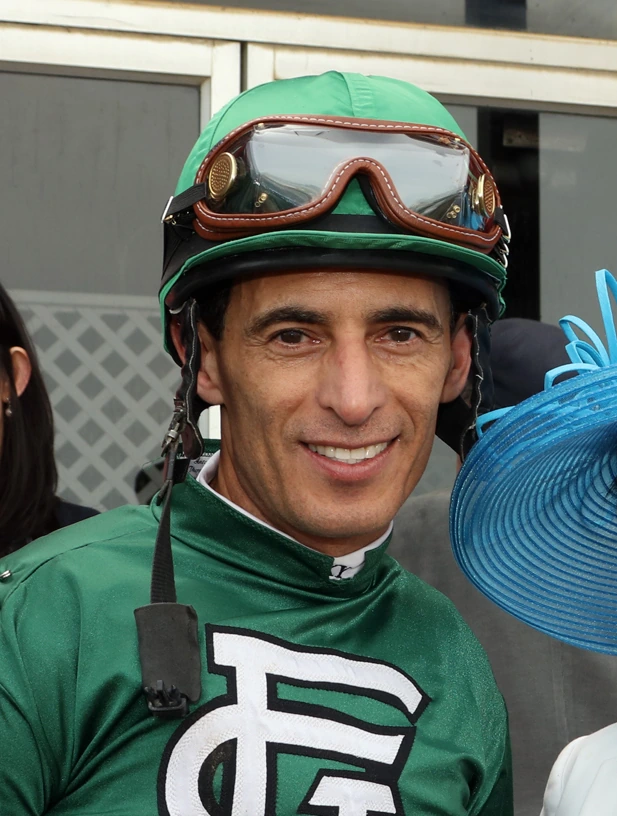
John Velazquez's net worth is most defensibly estimated at around $14 million, though a realistic range of $10 million to $18 million accounts for the uncertainty in any public estimate. That figure comes primarily from his share of career purse earnings, which officially surpass $493 million in total prize money distributed to connections, combined with decades of consistent riding fees, endorsements, and other income streams.
John Velazquez Jockey Net Worth: Estimate and Breakdown

Ricardo Sandoval
20 Apr 2026
The National Museum of Racing and Hall of Fame lists John Velazquez as North America’s all-time leader in purse earnings with $513,744,588 and cites 6,786 career races through 2025. It is not a number pulled from a tax return or audited balance sheet, no such document is public, but it is grounded in verifiable career data and is consistent with what comparable elite jockeys accumulate over long careers at the top of North American racing.
Who John Velazquez is

John R. Velazquez was born on November 24, 1971, in Puerto Rico. He rode his first winner in Puerto Rico on January 3, 1990, and then his first U.S. winner at Aqueduct on March 12, 1990. That rapid transition to the American circuit set the tone for a career that would eventually make him the all-time leading jockey by purse earnings in North America. He is based in New York and has long been closely associated with trainer Todd Pletcher, one of the most productive partnerships in the sport's history.
The career milestones are genuinely impressive. He won his 3,000th race at Saratoga on July 29, 2004, and his 4,000th at Belmont Park on September 28, 2008. He earned Eclipse Awards as Outstanding Jockey in both 2004 and 2005, when he led all of North American racing in earnings. He was inducted into the National Museum of Racing and Hall of Fame in 2012.
His Triple Crown résumé includes three Kentucky Derby wins, two Belmont Stakes victories (Rags to Riches in 2007 and Union Rags in 2012), and his first Preakness Stakes win in 2023 aboard National Treasure on his 13th attempt. As of 2024, he has 6,677 or more career wins, and he won the Breeders' Cup Sprint at the 2024 Breeders' Cup aboard Straight No Chaser. He has won 24 Breeders' Cup races across his career.
If you searched for "John Velazquez jockey net worth" and landed here, you are in the right place. This is the Hall of Fame jockey from Puerto Rico, not to be confused with other individuals named Velazquez who appear in related searches on this site.
What "net worth" actually means for a jockey
Net worth is assets minus liabilities. For a jockey, that means everything owned (cash, investments, real estate, business interests, retirement accounts) minus everything owed (mortgages, loans, taxes due, other obligations). It is not the same as career earnings, and this distinction matters a lot when you see the big numbers thrown around in horse racing.
When a source says Velazquez has ridden horses that earned over $493 million in purses, that does not mean he pocketed $493 million. In North American horse racing, jockeys typically receive about 10 percent of purse money on winning rides and around 5 percent on non-winning mounts. The winning percentage can vary slightly by track and contract, but 10 percent is the standard benchmark. Owners take the largest share, trainers take their cut, and the jockey's agent also takes a commission, typically 25 to 30 percent of the jockey's earnings. So the gross purse figure needs to be reduced significantly before you arrive at anything close to personal income for the rider.
From that personal income, a jockey still pays taxes, insurance (riders carry their own liability and disability insurance), travel, equipment, and living expenses. What remains after all of that, invested and accumulated over a career, becomes net worth. For elite jockeys with long careers at major tracks, those numbers can still be very significant, but they are a fraction of the headline purse totals you see cited online.
The most defensible net worth estimate today

The most widely cited figure for John Velazquez's net worth is $14 million, as reported by Celebrity Net Worth. The most widely cited figure for John Velazquez's net worth is $14 million, as reported by Celebrity Net Worth jacob velazquez net worth. That site aggregates public data and uses estimation methods, and it does not publish full methodological breakdowns, but the number is consistent with a reasonable back-of-envelope calculation based on career earnings data that is actually verifiable.
Here is why the $14 million figure is defensible, even if it is not precise. For a quick comparison to this $14 million midpoint, you can also review william velazquez net worth as a related estimate angle. When a source says Velazquez has ridden horses that earned over $493 million in purses, that does not mean he pocketed $493 million nes velazquez net worth.
These mechanics also explain why any discussion of Johnny Velazquez net worth should be understood as an estimate built from career income rather than a direct figure.
If Velazquez has ridden in races generating more than $493 million in purses over his career, and he collected an average of around 10 percent on wins and 5 percent on non-winning mounts across thousands of starts, his gross personal riding income over 35-plus years in racing likely reaches well into the tens of millions of dollars before taxes and expenses.
Add endorsements, appearance fees, and any investment returns, and a net worth in the low-to-mid eight figures is realistic for someone who rode at the absolute top of the sport for decades without a major career interruption. A range of $10 million to $18 million reflects the genuine uncertainty in these estimates without pretending to precision that no public source can actually provide.
| Source | Net Worth Figure | Basis |
|---|---|---|
| Celebrity Net Worth | $14 million | Public data aggregation, estimation |
| Back-of-envelope from purse data | $10M–$18M range | Jockey % of $493M+ purses, career length |
| Equibase / racing statistics | Not a net worth figure | Raw purse earnings data only |
The takeaway: treat $14 million as a reasonable midpoint estimate, not a verified fact. The honest range sits between $10 million and $18 million depending on how much of his income he retained, invested, and protected from taxes and expenses over the years.
How he built his money: career earnings breakdown
Velazquez's wealth-building rests on three pillars: an enormous volume of mounts over more than three decades, consistent wins at the highest levels, and a reputation that kept him on the best horses year after year.
Volume and consistency

In 2004, his single best documented earnings year, Velazquez had 1,327 mounts, 335 wins, and generated $22,248,661 in purse earnings for connections, earning him the Eclipse Award and the North American earnings title. His personal take from that season alone, at roughly 10 percent of wins and 5 percent of other mounts, would have been in the $2 million to $3 million range before taxes and agent fees. Replicate something close to that performance across 30-plus active years and the cumulative personal income becomes very large. Even in 2025, Equibase data shows him generating $21,284,926 in purse earnings from 778 starts and 117 wins, confirming he remained a top-10 earner in North America well into his mid-50s.
Major wins and prestige rides
Big races pay better, and Velazquez rode in many of them. The Breeders' Cup Sprint he won in 2024 carried a $2 million purse. For the 2024 Breeders' Cup Sprint, the Breeders’ Cup Sprint record lists John Velazquez as the winning jockey and shows a US$2,000,000 purse. The Kentucky Derby, Preakness, and Belmont Stakes each carry purses well above $1 million. His 24 Breeders' Cup victories across his career represent a significant concentration of high-purse wins. Prestige wins also tend to generate more mount requests, keeping his book of rides filled with quality horses from elite trainers, which multiplies earning opportunities.
Hall of Fame status and longevity
Hall of Fame induction in 2012 cemented his legacy but also provided ongoing marketing value and media demand. Career longevity is probably the most underrated factor in a jockey's wealth. Velazquez rode his first U.S. winner in 1990 and was still top-10 in earnings in 2025. That is 35 years of continuous income from riding, which compounds significantly compared to jockeys whose careers are shortened by injury or declining demand.
Income beyond the saddle: endorsements, roles, and other channels
Jockeys at Velazquez's level can generate income outside of riding fees, though public documentation of specific deals is limited. Here is what is known and what is reasonable to infer.
- Endorsements and sponsorships: Elite jockeys in the U.S. can attract sponsorship deals from racing equipment brands, equine industry suppliers, and occasionally broader lifestyle or sports brands. Velazquez's name recognition, especially in Puerto Rico and among Spanish-speaking racing fans, gives him a specific audience appeal. No specific dollar figures for his endorsements are publicly documented.
- Media and appearances: Hall of Fame jockeys are frequently invited to broadcast segments, industry panels, and fan events. These appearances carry fees, though the scale varies widely and no specific figures for Velazquez are public.
- Industry leadership: Velazquez served as Co-Chairman of the Jockeys' Guild and on the board of the Permanently Disabled Jockeys Fund. Leadership positions like these typically involve unpaid volunteer work, but they do build relationships and influence within the industry that can create other paid opportunities.
- Business interests and investments: No specific business ventures have been publicly documented for Velazquez, but jockeys with long careers at major tracks often accumulate real estate or investment portfolios with the help of financial advisors. Any such assets would factor into net worth but are not visible from public data.
The honest picture is that riding fees and purse percentages almost certainly make up the large majority of his wealth. The supplemental income channels matter at the margin and over time, but they are not the primary driver of a net worth in the $10 million to $18 million range.
How his net worth has shifted over time
Velazquez's earning power has tracked closely with his competitive standing and his relationships with top trainers, particularly Todd Pletcher. The timeline below captures the key inflection points.
| Period | Key Development | Wealth Impact |
|---|---|---|
| 1990–1999 | Established career in New York, first Breeders' Cup win (1998) | Growing but modest income; reputation building phase |
| 2004–2005 | Eclipse Award winner both years; 2004 earnings leader ($22.2M in purses) | Likely peak annual income; significant wealth accumulation begins |
| 2007–2012 | Belmont wins, Hall of Fame induction (2012), 4,000th career win | Continued elite earnings; legacy status increases demand and fees |
| 2013–2022 | Consistent top-tier presence; third Kentucky Derby win in 2020 | Steady high-volume income over nearly a decade |
| 2023–2025 | First Preakness win (2023), Breeders' Cup Sprint win (2024), top-10 in 2025 earnings | Active high earnings well past typical career peak; wealth maintained or growing |
One thing worth noting: staying competitive at the highest levels in your 50s is rare in professional sports, and it directly affects net worth. A jockey whose income drops sharply in their 40s has far less wealth-building time than someone like Velazquez, who has maintained a top-10 earning position in North American racing through 2025. His net worth today is likely higher in real terms than it was at his 2004 peak, assuming reasonable investment behavior over the intervening years. If you are tracking changes over time, you can also review how John Velazquez net worth may shift as his earnings and investments evolve.
How to verify this figure and what to watch out for

If you want to fact-check or update any net worth estimate for John Velazquez, here is a practical approach to doing it yourself and avoiding the pitfalls that trip up most readers. If you want to fact-check or update any net worth estimate for John Velazquez, here is a practical approach to doing it yourself and avoiding the pitfalls that trip up most readers maday velazquez net worth.
- Start with Equibase for career and seasonal purse earnings. Equibase is the official statistical record for North American thoroughbred racing and lists purse earnings by jockey for each year. These are the closest thing to verified income data available publicly. Remember these are purse totals, not personal income.
- Cross-reference with the National Museum of Racing and Hall of Fame. Their profile lists Velazquez's career wins (6,677 or more through 2024) and his all-time purse earnings total (over $493 million). This is a reliable institutional source for career summary data.
- Check the Eclipse Awards record from NTRA for his award years (2004, 2005) and the annual champion jockey tables on Wikipedia for season-by-season context on what his best earning years looked like.
- Apply a conservative jockey earnings model. Take the verified purse earnings total, apply roughly 8 to 10 percent as his gross personal riding income (accounting for the mix of winning and non-winning rides), then subtract agent commissions of 25 to 30 percent, taxes, and career expenses. The residual, compounded over 35 years, is a rough floor for accumulated wealth.
- Treat any single-number net worth from aggregator sites as a midpoint estimate. Celebrity Net Worth and similar sites use public data and estimation; their $14 million figure is reasonable but not audited. If a site claims a number far above or below $10 million to $18 million without any explained methodology, treat it with skepticism.
- Watch out for inflated purse earnings being presented as personal net worth. The $493 million figure refers to total purses earned by horses Velazquez rode — it is not his income. Any site presenting that number as his personal wealth is either wrong or misleading.
- Check the date of any estimate. Net worth figures from 2015 or 2020 may not reflect his continued active earnings through 2025. Given that he generated over $21 million in purse earnings in 2025 alone, estimates more than a few years old understate current wealth.
It is also worth keeping in mind that net worth for athletes is genuinely difficult to pin down from the outside. Financial disclosures are not required for professional jockeys. Investment portfolios, real estate holdings, and business interests are not public. What we have are career earnings data, reasonable industry assumptions about jockey compensation structures, and aggregated estimates from sites that do their best with incomplete information. The range of $10 million to $18 million is honest about that uncertainty, and the $14 million midpoint is as defensible an estimate as any currently available.
For readers interested in other members of the Velazquez name in public life, this site also covers a variety of Velazquez figures across entertainment, sports, and business, from other athletes to media personalities, each with their own distinct career and wealth profile.
FAQ
Does John Velazquez actually have $493 million in net worth from the purses he rode?
No. Career purse earnings are amounts paid to connections, and a jockey’s typical cut is only a portion of the purse, plus additional reductions for agent commission. After taxes, insurance, and day-to-day expenses, net worth will be noticeably lower than the headline purse total.
Why can two estimates put John Velazquez’s net worth at different numbers even if they start from the same career earnings?
Net worth estimates usually change when assumptions about savings rate and investment performance change. Even if yearly riding income is similar, someone who kept more after taxes and reinvested conservatively versus aggressively can end up with a substantially different net worth over decades.
What details should I look for to judge whether a John Velazquez net worth estimate is reasonable?
If you’re comparing across sources, check whether the estimate is based on gross career earnings or on a net-of-fees model. A credible model will incorporate jockey percentage on wins and mounts, agent commission (often taken from the jockey share), and then subtract estimated taxes and living or overhead costs.
How should I interpret year-to-year changes in John Velazquez net worth versus his yearly purse earnings?
In the U.S. many payouts are reported for the year and track, but the portion that ends up as “personal” income depends on contracts, mounts, and agent terms. Also, some income can be deferred through investment timing, so net worth may not track any single year’s purse earnings.
How much does injury or time away from riding affect a jockey’s net worth trajectory?
Yes. A long career can still produce a high net worth even with injuries or short slumps, because the cumulative income over many active seasons compounds. But a major interruption can create a long-term gap that is hard to fully recover, especially if it reduces ride quality and booking demand afterward.
If endorsements and appearance fees are smaller, can they still meaningfully change John Velazquez’s net worth estimate?
Endorsements and media appearances can add value, but for top jockeys the dominant factor is still riding volume and ride quality. A practical way to think about it is that non-riding income likely matters for incremental difference, not for explaining a large multi-million estimate on its own.
Why is “net worth” not the same as “what he made,” and how do liabilities factor in?
No. Net worth is assets minus liabilities, so leverage (mortgages, business loans, or margin used for investments) can move net worth down even if gross income was high. However, athletes with consistent top-level earnings can also build liquidity faster, which typically supports higher net worth.
What are the most common mistakes people make when calculating a jockey’s net worth from purse totals?
Common red flags include treating “purse earnings” as if it equals “money earned,” using a single flat percentage without accounting for losing mounts and agent commission, or ignoring taxes and ongoing costs like training updates, travel, and insurance.
How can I do a quick sanity-check calculation for John Velazquez net worth without needing private financial records?
You can sanity-check the order of magnitude by back-of-the-envelope modeling: estimate the jockey’s gross share using win and non-win mount rates, subtract an allowance for agent commission, then subtract a reasonable effective tax rate and recurring expenses, and finally assume some portion is saved and invested over the career.
How do I avoid mixing up John Velazquez with other people who have similar names when checking net worth?
If you see “net worth” reported for “John Velazquez” but the name is similar or the article mixes multiple individuals, it may be confusion risk. Confirm identity using birthdate, racing location, Hall of Fame status, and career milestones before trusting the number.
Next Article
Fernando Valenzuela Net Worth at Death: How to Verify
Cómo verificar el patrimonio neto de Fernando Valenzuela al fallecer: fuentes, método y cómo conciliar cifras.