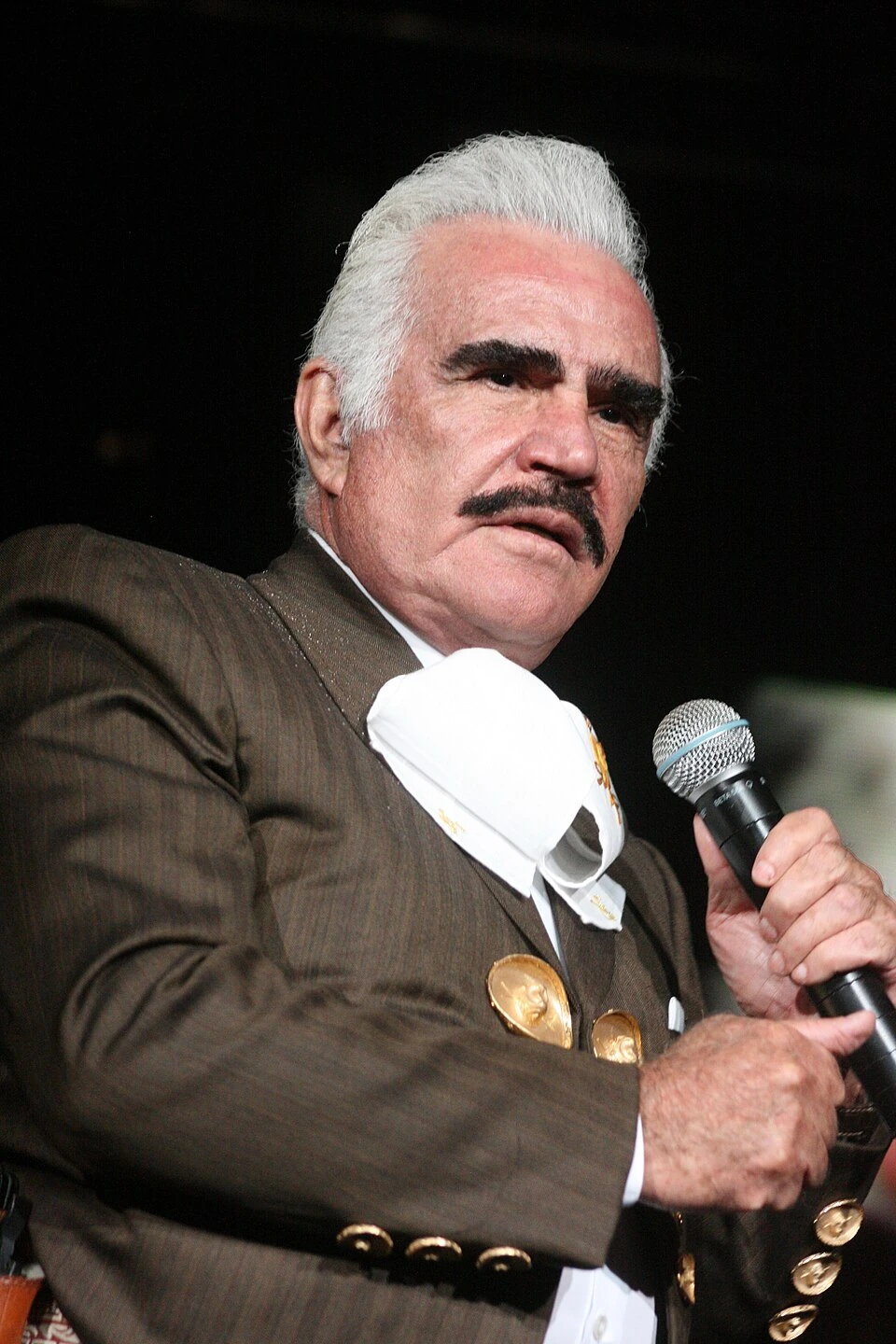
The most widely cited figure for Vicente Fernández's net worth at the time of his death is $25 million, according to CelebrityNetWorth. That number is a useful starting point, but it is an estimate, not an audited inventory. If you are trying to understand what Fernández was actually worth when he passed away on December 12, 2021, you need to know how that figure was arrived at, what it likely includes, and why other sources may show something different. This article walks through all of that.
Vicente Fernández Net Worth at Death: What We Know

Ricardo Sandoval
27 Mar 2026
What "net worth at death" actually means

Net worth at death is a snapshot, not a lifetime total. It represents the value of everything a person owned minus everything they owed at a specific moment in time, which in this case is the date of death. It is not a measure of career earnings, total revenue generated, or lifetime wealth. A performer could earn $100 million over a 50-year career and still have a much smaller net worth at death if they spent heavily, gave assets away, or transferred wealth to family members while still alive.
This distinction matters a lot for Fernández, because reporting suggests he distributed a significant portion of his assets to his children while he was still living. That means the at-death figure may be meaningfully lower than what his peak net worth looked like during the height of his career and business expansion.
Major publications handle this differently. Forbes, for example, explicitly anchors its net worth figures to a defined date (the Forbes 400 uses September 1 of each year as its valuation cutoff). When no valuation date is declared, a published net worth figure could reflect data from any point in time, which makes comparing numbers across sources unreliable without knowing the methodology behind each one.
How Vicente Fernández built his fortune
Fernández had one of the longest and most commercially successful careers in the history of Mexican popular music. His income streams were diverse and compounding, which is why his wealth held up across decades.
Music recordings and royalties

Fernández recorded over 50 studio albums across five decades. In an era before streaming, physical album sales and licensing generated significant upfront income and ongoing royalty payments. Those royalties, tied to compositions and recorded performances, continue generating revenue for his estate even after his death. Intellectual property rights are an asset category that can carry real long-term value, and they are often underrepresented in rough celebrity net worth estimates.
Live performances and touring
Live performance was likely Fernández's single largest income driver for most of his career. He performed in venues across Mexico, the United States, and Latin America for decades, consistently drawing large audiences. Tour revenue scales quickly: a performer selling out arenas over a multi-decade run accumulates substantial cash flow. As early as 2001, he was partnering with major sponsors like General Motors on concert tours targeting the Western U.S. market, which shows how early his touring operation became a serious commercial enterprise.
Television and film
Fernández appeared in dozens of Mexican films and television productions, particularly in the 1970s and 1980s. While film and TV fees are typically one-time payments rather than ongoing royalty streams, the visibility they created supported his broader brand value and sustained demand for live appearances.
Endorsements and brand partnerships

Throughout his career, Fernández lent his name and image to commercial partnerships. His brand attracted major corporate partners precisely because of his consistent appeal with a loyal demographic. These deals contributed to income well beyond ticket and record sales.
Trademarks, licensing, and IP
Fernández registered trademarks under his name covering a broad range of product categories: entertainment services, apparel, perfumes and fragrances, tequila, and more. These registrations are not just symbolic. They are enforceable assets that can be licensed to third parties for fees, and they represent ongoing income potential for his estate long after his death.
Real estate and the Rancho Los Tres Potrillos
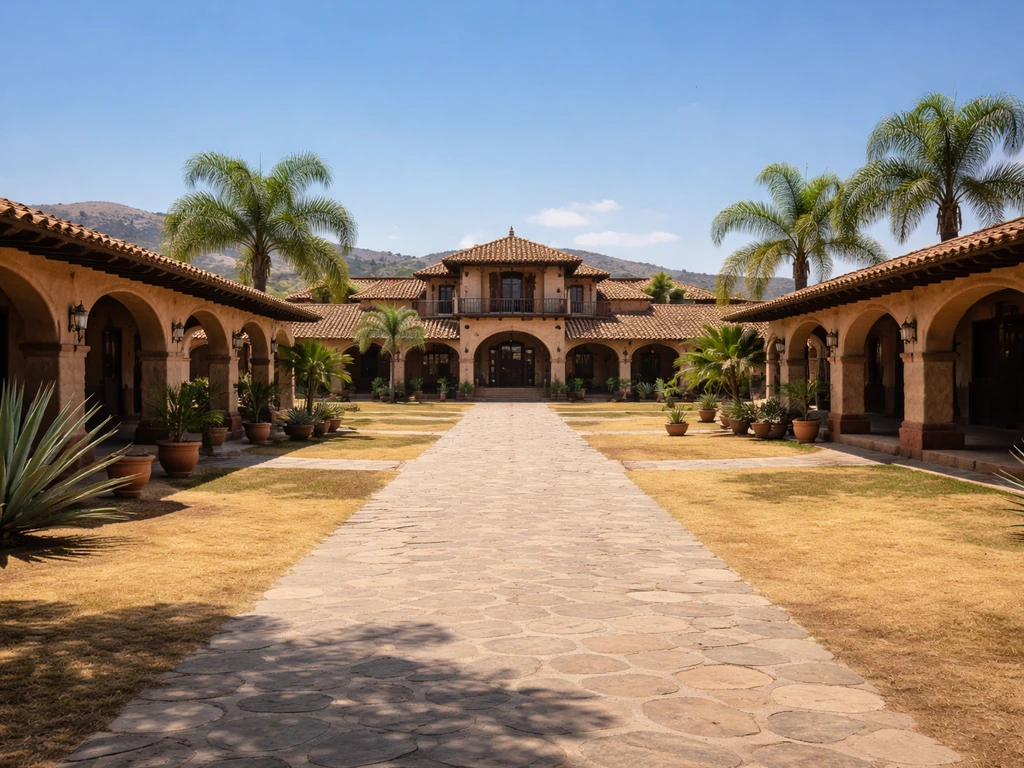
Fernández's rancho Los Tres Potrillos in Jalisco was both a personal residence and a working property closely identified with his public image. Real estate holdings like this contribute directly to net worth calculations, though their market value depends on how the property is appraised and whether it carries any debt.
Grupo Fernández and the Arena VFG
The corporate umbrella for his business interests, Grupo Fernández, controlled a range of Mexican and international companies. One of the most concrete examples is Arena VFG, an entertainment venue constructed in 2005 as an enterprise project of Grupo Fernández. The arena later entered an administrative alliance with OCESA, one of the largest live entertainment companies in Latin America. Operating a venue of that scale generates venue rental fees, event revenue, and long-term asset value that goes well beyond what most fans think of when they hear "musician's net worth."
How these estimates are actually calculated
Celebrity net worth estimates are built from publicly available information, not private financial records. The standard formula is simple: total assets minus total liabilities. But applying that formula to a private individual's estate is where things get complicated.
For someone like Fernández, estimators typically try to account for asset categories that include real estate (market value of known properties), equity stakes in private and public companies, royalty income streams (valued as a multiple of annual payments), trademarks and IP rights, cash and liquid financial assets, and physical assets like vehicles, art, and collections. Liabilities would include mortgages, loans, business debts, and any outstanding tax obligations.
The problem is that most of this information is not public for a private Mexican citizen, even one as famous as Fernández. No one outside his family and legal advisors has access to his bank statements, mortgage balances, or a full inventory of his business equity. Estimators work from reported details, known property transactions, corporate filings where accessible, and comparables in the industry. That means every published figure involves inference and assumptions.
Timing also matters. The valuation date for an at-death estimate should be December 12, 2021. A figure published in 2018 or updated without a clear methodology note could reflect different asset values, exchange rates, or business conditions.
Public records and reliable sources worth checking
There is no single authoritative public document that gives you Fernández's estate value. What you can piece together comes from multiple types of sources, each with different levels of reliability.
- Mexican public business registries: Grupo Fernández and its subsidiaries, including Inmobiliaria el Jilguero, Organización de Espectáculos de Occidente, Conexión Ejecutiva GDL, Desarrolladora Santa Fe-Zapopan, Inmobiliaria Ferabar, and Grupo Cavae, may have filings in Mexico's Registro Público de Comercio that describe ownership structures and registered capital.
- Trademark registries: The Instituto Mexicano de la Propiedad Industrial (IMPI) lists registered trademarks. Searching for trademarks under Fernández's name gives you a concrete view of his IP portfolio.
- Property records: Mexican catastro (property registry) records for Jalisco would show registered real estate, though valuations in those records can lag market value significantly.
- Forbes México and reputable business press: Publications like Forbes México have reported on the specific corporate entities linked to Fernández and his sons, providing a more detailed picture than entertainment-focused outlets.
- CelebrityNetWorth: Useful as a reference point for the $25 million figure, but worth treating as an estimate rather than an audited number. Wikipedia has noted that CNW content is largely written by freelance writers rather than researchers, and The New York Times has described some of its content as clickbait. That does not make the figure wrong, but it does mean you should not treat it as the final word.
What you will not find, at least based on publicly available information as of this writing, is a probate inventory or court-filed estate valuation from Mexican legal proceedings that gives an official at-death net worth figure. That type of document, if it exists, has not been made publicly accessible.
His estate: heirs, trusts, and business holdings
Fernández was survived by his wife, María del Refugio Abarca Villaseñor (known publicly as Cuquita), and his children: Vicente Jr., Alejandro, Gerardo, and Alejandra (whom he adopted and raised as family). His son Alejandro Fernández went on to become a major recording artist in his own right and was already an established business partner before his father's death.
Multiple reports indicate that Fernández distributed a portion of his assets to his children while he was still alive, which is a common estate-planning approach that reduces the value of the estate that passes at death. Revista Clase reported that he had left a will and had already distributed parts of his wealth to children and grandchildren during his lifetime. The exact percentages going to his spouse versus his children are not publicly known.
His sons Alejandro and Gerardo were listed as partners in several of the Grupo Fernández corporate entities. That means at least some of the business holdings were already in shared or transferred ownership before his death, which would affect what passed through his estate versus what remained in family corporate structures independent of his personal will.
This is exactly why "net worth at death" can look smaller than people expect. If the ranch, the arena stake, and the trademark portfolio were partially or fully held through corporate entities with shared ownership, only his proportional interest in those assets would count toward his personal net worth, not the full market value of the assets themselves.
How his wealth likely changed over time
Fernández's financial trajectory followed a recognizable arc for long-career Latin entertainers. His wealth grew steadily through the 1970s and 1980s as recording and film work compounded. The 1990s and 2000s brought a major commercial expansion: touring revenue scaled up, corporate partnerships grew more sophisticated, and the business infrastructure around Grupo Fernández expanded into real estate and venue ownership with the Arena VFG opening in 2005.
Peak earnings likely occurred in the 1990s through mid-2000s, when live touring demand was at its highest and the business empire was actively expanding. He announced his retirement from touring in 2016, which would have reduced live performance income while royalty and licensing revenue continued. The years between retirement and his death in 2021 likely saw his liquid income decrease while asset values remained, making the at-death snapshot different from the peak-career picture.
| Period | Key Wealth Drivers | Likely Trend |
|---|---|---|
| 1970s–1980s | Recording contracts, film fees, early touring | Growing steadily |
| 1990s–2000s | Arena tours, corporate sponsorships, Grupo Fernández expansion, Arena VFG (2005) | Peak accumulation |
| 2006–2016 | Continued touring, trademark licensing, real estate, brand deals | Plateau with diversification |
| 2016–2021 | Royalties, licensing, passive business income, estate planning transfers | Declining active income, asset redistribution |
Why the numbers vary so much across sources
If you search for Vicente Fernández's net worth across multiple sites, you will find a range of figures. Here is why that happens and what it means.
- Different valuation dates: A figure from 2015 is not the same as a figure from 2021. If a site updated its estimate before his retirement or before known asset transfers, the number will not reflect his at-death situation.
- Currency and exchange rates: Fernández's assets were largely Mexico-based. Mexican peso valuations converted to U.S. dollars shift significantly with exchange rate fluctuations, meaning the same asset base can produce different dollar figures depending on when the conversion was made.
- Methodology differences: Some sources count gross asset value without subtracting liabilities. Others estimate only visible or reported assets and miss private holdings. Neither approach is necessarily wrong, but they produce incomparable outputs.
- Omitting pre-death distributions: If a source does not account for the fact that Fernández transferred assets to family members during his lifetime, it will overstate his personal estate at death.
- Non-audited estimation: No celebrity net worth database has access to private tax filings, estate inventories, or bank records. All published figures are estimates built from public signals, not verified financial statements.
- Rumor amplification: Secondary sources sometimes copy and inflate numbers from primary sources without verification, creating the illusion of consensus around a figure that was already an estimate.
The $25 million figure from CelebrityNetWorth is the most commonly repeated at-death estimate and serves as a reasonable baseline. But given the scale of Grupo Fernández's reported holdings, the trademark portfolio, and the Arena VFG asset alone, some analysts have suggested the actual figure could be higher, depending on how business equity is valued and attributed. Without a public estate inventory, a defensible range is more honest than a single number.
How to build the most accurate estimate yourself
If you want to go beyond the $25 million headline and form a more grounded view, here is a practical approach you can follow using publicly available tools and sources.
- Start with the $25 million CelebrityNetWorth figure as your baseline, noting that it reflects their estimate as of his December 2021 death.
- Search IMPI (Instituto Mexicano de la Propiedad Industrial) for trademark registrations under Vicente Fernández's name to identify the scope of his IP portfolio. Licensing revenue from active trademarks adds to both income and asset value.
- Look up corporate filings for Grupo Fernández entities in Mexico's Registro Público de Comercio. The named subsidiaries reported by Forbes México (Inmobiliaria el Jilguero, Organización de Espectáculos de Occidente, and others) are a starting point for understanding the business structure.
- Research Arena VFG's current ownership status and any reported valuation figures in Mexican business press. As a venue with operating history since 2005, it represents a concrete real asset tied to Grupo Fernández.
- Check Jalisco catastro records or Mexican real estate market data to estimate the value of Rancho Los Tres Potrillos and any other known Fernández real estate.
- Apply a conservative liability adjustment. Even without knowing specific debts, a functioning business empire of this scale typically carries mortgages, operating loans, and tax obligations. Assume some offset against gross asset values.
- Account for lifetime distributions. If reporting is accurate that assets were distributed to children before death, your at-death figure should reflect only what remained in Fernández's personal estate, not the full value of assets already transferred.
- Cross-reference findings against reputable business reporting in Spanish-language outlets (Forbes México, El Universal, Infobae) rather than relying solely on English-language celebrity net worth sites.
- Express your result as a range, not a single number. Given the information gaps, something like $20 million to $35 million is more defensible than pinning to a single figure without access to private estate records.
The honest bottom line is this: the best publicly available estimate puts Vicente Fernández's net worth at death at approximately $25 million, but the real figure could be higher when the full corporate structure and IP portfolio are accounted for, or lower if pre-death asset transfers reduced his personal estate more than reporting suggests. Anyone claiming to know the exact number without access to estate filings is working from the same incomplete public record that everyone else has. What you can do is build a more informed range, understand where it comes from, and treat any single published figure as a starting point rather than a final answer.
FAQ
If the article says the at-death figure is $25 million, how do I verify it is actually measured on his death date (Dec 12, 2021)?
“At death” should mean values as of December 12, 2021, not a rounded figure from a later update or an earlier year. If a site does not state a valuation date or method (for example, exchange-rate assumptions), treat its number as potentially reflecting a different point in time rather than a true death-date snapshot.
What types of income or assets are most likely to be missed or undervalued in “net worth at death” estimates for performers like Vicente Fernández?
Look for whether an estimate credits ongoing IP streams separately from trademarks and licensing. Many calculators lump everything into a single “net worth” line and undervalue long-duration revenue assets, especially royalties and franchise-style brand licensing that can persist even when touring stops.
Why do Vicente Fernández net worth numbers sometimes seem inconsistent with his career success and earnings?
A common mistake is comparing one person’s “net worth” to another’s “lifetime earnings.” Net worth at death can be much lower than career revenue if assets were transferred while alive, held in shared entities, or used to pay down debt. If you want a fair comparison, compare estimates only when they use similar definitions and valuation timing.
How do shared ownership and corporate structures change what “net worth at death” really means?
For private individuals, “equity” and “stakes” matter as much as the headline value of companies. If Grupo Fernández assets were held through corporate structures where family members were already partners, only Vicente Fernández’s proportional interest likely counts toward his personal net worth at death.
Can real estate or a major venue still inflate a net worth headline even if the assets had debt or obligations attached?
Yes. Even if a ranch or venue exists on paper, its value for net worth purposes can be reduced by mortgages, operational debt, or restrictive agreements. A reliable estimate should account for liabilities tied to real estate and business operations, not just the apparent market value of the property.
What red flags should I watch for in extreme or unusually precise net worth-at-death claims?
If you see a very high number with no clear breakdown, it often means assumptions about trademark/IP value or business equity multiples. A practical check is whether the estimate explains how it converts royalties and licensing into a present value, and whether it describes a discount rate or valuation multiple at a level you can conceptually audit.
How can I create a more defensible estimate range using only public information?
Consider building a range rather than trusting one figure. Start with a baseline estimate (like the commonly cited $25 million), then adjust conceptually for likely undercounted IP and royalties versus potential overcounting of full asset values instead of his proportional interest, and treat any change in currency or exchange-rate timing as a separate source of variation.
If reports say he distributed assets while alive, can we determine how much was left in his estate at death from public sources?
Yes, but only indirectly. Public reporting on wills and asset distributions helps explain why an at-death snapshot might be lower, yet it usually does not provide a full accounting of what remained versus what was already transferred into family ownership before death.
Does a lower “net worth at death” imply his family lost out on the music and brand value after he died?
Be careful with “successor estate” thinking. Some value might continue through the family and ongoing royalties and licensing even if it was legally outside the estate at death. That means a lower at-death figure does not necessarily mean lower continuing economic benefit for heirs, just a different legal ownership timeline.
What evidence would be required to confirm the exact “net worth at death,” and why is it usually not available for famous private individuals?
If a probate inventory or court valuation is not publicly accessible, no one outside the legal process can confirm the exact number. The best you can do publicly is triangulate from corporate filings, known property transactions, and plausible royalty and IP valuation methods, then label it as an estimate, not a verified accounting.
Next Article
Vicente Fox Net Worth: Estimated Range, Sources, and Updates
Estimated Vicente Fox net worth range, sources, why figures differ, and how to verify the latest update.